Worth Every Penny? The Real Reason Mountain Venues Can Charge What They Want
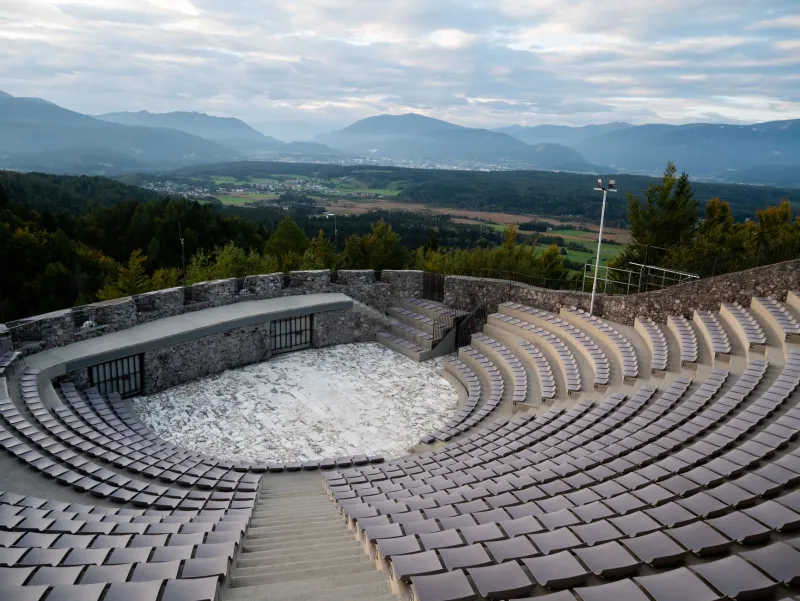
Let's be honest about something. When you pay $275 for a general admission ticket to a festival perched somewhere above 8,000 feet — a show you could theoretically replicate by catching the same artist at a mid-size theater back home for $60 — you're not just buying music. You're buying a whole story. The mountain air. The backdrop. The feeling that you went somewhere to hear something, rather than just showed up.
Venue operators know this. Fans know this. And yet the tickets keep selling out, often within hours of going on sale.
So what's actually driving the premium? And is the gap between mountain ticket prices and their urban counterparts justified by something real, or is it the most elaborate case of collective self-persuasion the live music industry has ever pulled off?
The Numbers Don't Lie
Data from secondary ticketing markets and venue-reported figures tell a pretty consistent story. Alpine-style destination venues — think outdoor amphitheaters built into ridgelines, festival grounds accessible only by gondola or winding two-lane roads, lodge-adjacent concert spaces in resort towns — are commanding average ticket prices 40 to 180 percent higher than comparable artists playing urban venues in the same touring cycle.
That's not a small gap. A mid-tier headliner who plays a 3,000-capacity club in Nashville for $85 a ticket might anchor a mountain festival weekend at $220 per day pass. The same band. Roughly the same set. Wildly different price point.
And yet, as one Colorado-based venue director told us — speaking on background because his contracts prohibit public pricing discussions — "We've never had a problem selling out. If anything, we've had to get more creative about managing demand."
The Exclusivity Math
Part of what you're paying for is simple scarcity. Mountain venues are, almost by definition, capacity-constrained. You can't just build a 20,000-seat arena into a narrow alpine valley. Infrastructure limits — parking, transportation, emergency access, environmental permitting — keep most mountain venues intimate. That intimacy has real value to attendees who are tired of watching their favorite artists from 400 feet away through a pair of binoculars.
"People pay for proximity," says one festival producer who runs events in both the Rockies and the mid-Atlantic. "In a mountain venue, you might be 30 feet from the stage in a 1,500-person crowd. That's a fundamentally different experience than being one of 15,000 people in an amphitheater parking lot. You can price that difference."
Small capacity also creates genuine secondary market pressure. When a venue sells 800 tickets and there are 4,000 people who want them, resale prices spike and the perceived value of the original ticket rises accordingly. It's basic supply and demand, dressed up in flannel and hiking boots.
The Destination Premium Is Real — And It's Priced In
Here's where things get interesting. Mountain venues aren't just selling a ticket. They're anchoring an entire trip. When fans buy into a mountain music experience, they're also booking flights, renting cars, reserving lodge rooms, and budgeting for three days of mountain town restaurant prices. The ticket is often the cheapest part of the whole weekend.
Venue operators understand this dynamic and use it deliberately. By positioning themselves as the centerpiece of a destination experience — rather than just another stop on a tour routing — they shift the frame entirely. You're not comparing the ticket price to what you'd pay at a venue across town. You're comparing it to what you'd spend on any other vacation. And by that measure, $220 suddenly seems pretty reasonable.
"We're not competing with the concert down the street," explains the owner of a small alpine-themed events venue in the mountain west. "We're competing with a trip to Mexico or a weekend in New York. When you think about it that way, our ticket price is a bargain."
That reframing — from entertainment expense to travel experience — is arguably the most powerful pricing tool in the mountain venue playbook.
What the Logistics Actually Cost
It would be unfair to suggest the premium is pure marketing magic. Running a concert at elevation is genuinely more expensive than running one in a city, and those costs get passed to ticket buyers.
Transportation logistics alone can be brutal. Getting sound equipment, lighting rigs, and stage infrastructure up a mountain road that wasn't designed for semi-trucks adds time, labor, and fuel costs that urban venues simply don't face. Weather contingency planning — backup generators, weather holds, potential cancellation insurance — runs higher when you're operating in an environment where afternoon thunderstorms are a near-daily occurrence in summer. Staffing is harder when your venue is 45 minutes from the nearest town with a hotel.
Permitting in protected or semi-protected natural areas comes with its own financial weight. Environmental impact studies, noise ordinance negotiations with local municipalities, and land-use fees all add up before a single artist is booked.
"People see the ticket price and think we're printing money," says one venue operator who's been running mountain events for over a decade. "They don't see the infrastructure costs, the logistics nightmare, the permits. Our margins aren't dramatically better than a city venue. We're just working harder for them."
The Experience Economy Argument
There's a broader cultural current running underneath all of this. Younger audiences in particular have shown a consistent willingness to spend more on experiences than on things — and mountain concerts represent a kind of peak (no pun intended) experience product. You can't stream the view from the stage. You can't replicate the feeling of hearing a song echo off a granite cliff face at dusk. The memory-making potential of a mountain show is genuinely higher than what most urban venues can offer, and that's worth something.
Psychologists who study consumer behavior have a term for it: the "experience premium." We value experiences more when they involve effort, travel, or some degree of difficulty in getting there. The harder it was to reach the concert, the more meaningful the concert feels. Mountain venues, almost accidentally, have built that psychology directly into their product.
So Is It Worth It?
That depends entirely on what you're optimizing for. If you want the most music per dollar, a mountain festival ticket is probably not your best bet. But if you want a weekend that you'll actually remember — one that comes with a landscape, a story, and the particular satisfaction of having gone somewhere for something — the math looks different.
The venues that are thriving aren't selling tickets. They're selling the answer to a question a lot of people are quietly asking: What would it feel like to hear great music somewhere that actually took your breath away?
Turns out, a lot of people are willing to pay to find out.