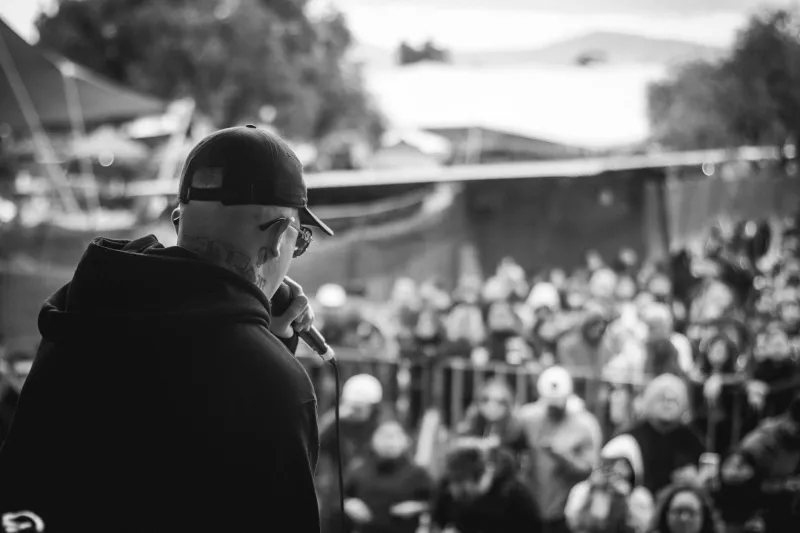
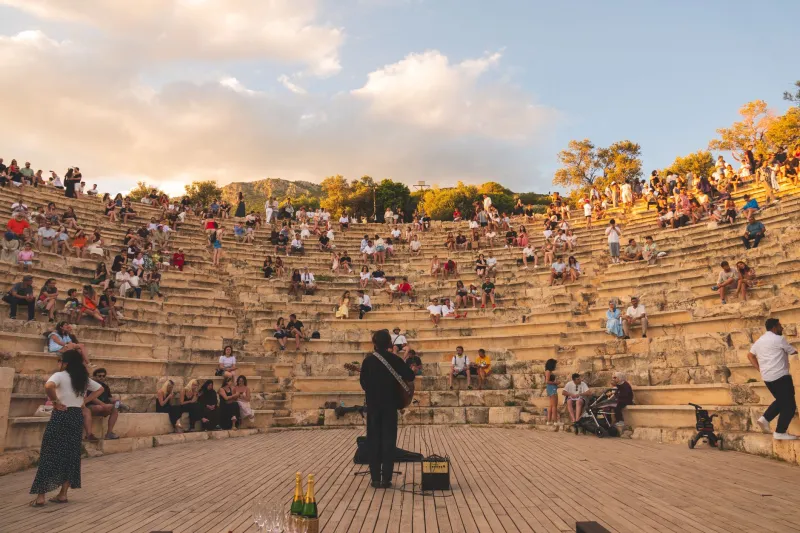
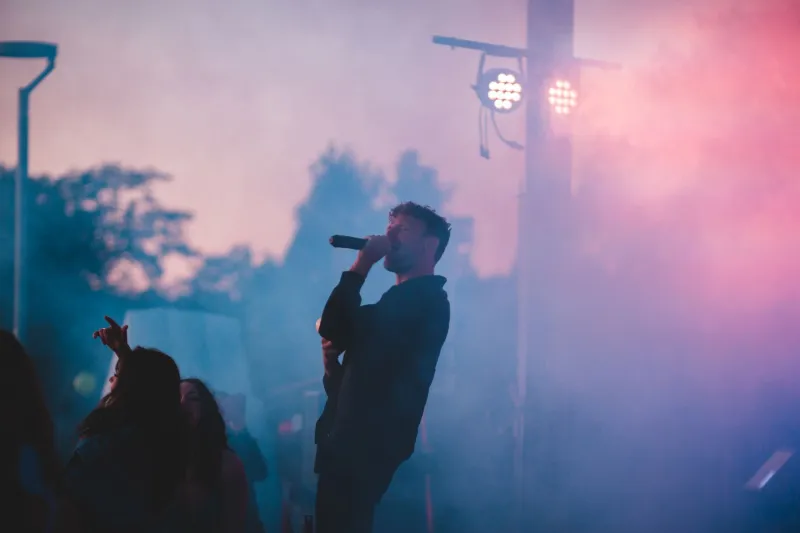
The Sound Engineers Quietly Ditching Arena Gigs for Mountain Stages — and Never Looking Back
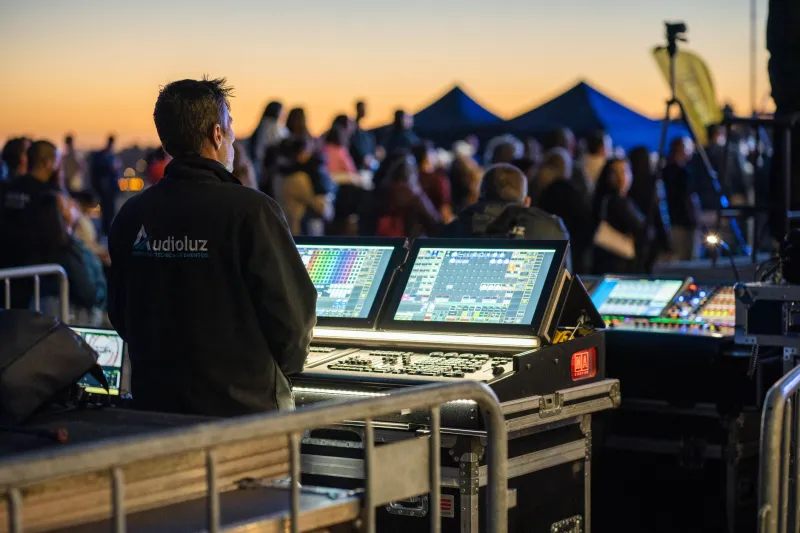
There's a running joke in the live sound world that goes something like this: the best gig you'll ever work is the one that pays you the least. It's the kind of gallows humor that touring engineers use to cope with long drives and longer nights. But lately, that joke has started to feel a little less like a punchline and a lot more like a career strategy.
Across the industry, a quiet exodus is underway. Veteran sound engineers — the kind with arena credits stacked deep on their résumés and gear endorsement deals to match — are walking away from lucrative touring contracts to mix at mountain festivals. Not as a sabbatical. Not as a one-off favor. As a deliberate professional pivot.
So what exactly is pulling them up the mountain? The answers are more complicated, and more fascinating, than you'd expect.
The Room That Isn't a Room
Ask any sound engineer what their biggest enemy is, and they'll say the same thing: the room. Indoor arenas are acoustic nightmares. Parallel walls bounce sound back at itself. Steel rafters create flutter echo. Low-frequency buildup turns bass-heavy mixes into mud pits. Engineers working those venues spend half their time fighting the architecture before they can even think about making music sound good.
Mountain stages don't have that problem — because they don't have walls.
"You're working with open air, natural terrain, and elevation," says Marcus Teel, a front-of-house engineer who spent twelve years on major arena tours before transitioning to festival work in the Colorado Rockies. "The sound doesn't get trapped. It moves. There's no ceiling reflecting everything back at you. Once you've mixed in that environment, going back to an arena feels like trying to paint inside a shoebox."
The physics back him up. At altitude, reduced air density changes the way sound waves propagate. High-frequency content travels more cleanly. The natural amphitheater shapes carved by mountain valleys create organic reflective surfaces that reinforce sound in ways no acoustic treatment panel can replicate. It's not magic — it's geology doing the work that engineers usually have to fight for.
The Creative Argument
Beyond the physics, there's a creative freedom argument that keeps coming up in conversations with engineers who've made the switch.
Arena tours are massive logistical operations. Every decision — from the PA hang angle to the monitor mix — goes through layers of approval. Artists have their preferences locked in. Promoters have their requirements. The production rider is basically scripture. There's very little room to experiment, and even less tolerance for anything that goes sideways.
Mountain festivals, by contrast, tend to attract artists who are already in a more exploratory headspace. The intimate scale of alpine venues encourages risk-taking on both sides of the mixing console.
"I've had conversations at mountain shows that I couldn't have imagined having on an arena tour," says Dana Kowalczyk, a monitor engineer based out of Nashville who now splits her year between touring gigs and a summer residency at a festival in the White Mountains of New Hampshire. "Artists are more relaxed. They're more willing to try something different. I've rebuilt entire monitor mixes mid-soundcheck because a band wanted to hear themselves differently — and it worked. That kind of creative collaboration just doesn't happen at the arena level."
That openness, engineers say, makes the work more satisfying in ways that a bigger paycheck can't fully compensate for.
The Gear Is Catching Up
One argument that used to hold mountain venues back was equipment. For a long time, the assumption was that serious audio required serious infrastructure — the kind that only well-funded arena operations could afford. Line array systems powerful enough to fill a mountain stage? Delay tower setups calibrated for open-air dispersion? Digital consoles sophisticated enough to handle complex festival inputs? Those things cost money, and smaller alpine venues didn't always have it.
That's changed significantly over the last decade. Advances in lightweight, high-output speaker technology have made it entirely feasible to field a world-class PA system on a mountain meadow. Digital console platforms have become more powerful and more portable. And a growing number of festivals — particularly in the American West and in tourist-heavy alpine corridors from Vermont to Montana — have made serious capital investments in their permanent audio infrastructure.
"The gear gap is basically closed," says Teel. "I'm running the same console I'd run on a major tour. The difference is everything around the gear — the air, the landscape, the audience. That's where the mountain wins."
What This Means for the Audience
Here's the part that matters if you're someone who actually goes to these things: the migration of elite engineering talent toward mountain festivals is quietly raising the floor on what live sound at those events sounds like.
When you're pulling engineers who've spent years optimizing audio for 20,000-seat venues and putting them to work on a 3,000-person alpine stage, the results are noticeable. Mixes are cleaner. Dynamics are preserved. The low end sits right without overwhelming everything else. The kind of sonic detail that gets smeared in a reverberant arena comes through with unusual clarity.
Festival-goers often describe mountain shows as sounding "more real" or "more live" than arena concerts — and while some of that is subjective, a meaningful chunk of it is the result of skilled engineers working in an environment that actually cooperates with them.
The Trade-Off Nobody Talks About
None of this comes without complications. Mountain gigs are physically demanding in ways that arena work isn't. Altitude affects concentration. Weather can change fast. Load-in and load-out at elevation, often on uneven terrain, is genuinely hard work. And yes, the pay differential is real — engineers making the switch are often taking a meaningful cut in annual income.
But the ones who've done it consistently describe something that's harder to quantify: a sense that the work matters more. That the sound they're producing is actually being heard, not just processed by ears that have already been beaten into submission by an hour of arena volume.
"I made more money on the road," Kowalczyk says plainly. "But I'm better at my job now than I was when I was doing it. The mountain teaches you things the arena never will."
The Bigger Picture
What's happening in the world of professional audio is a microcosm of something larger that's been reshaping the live music landscape for years. Artists are increasingly drawn to intimate, experiential settings. Audiences are paying premiums for events that feel personal rather than industrial. And the people whose job it is to make those experiences sound great are following the work — and the craft — to wherever it feels most alive.
For now, that place is increasingly somewhere above the treeline, where the air is thin, the stages are small, and the sound, somehow, is better than anywhere else you've ever been.