First Chance, Best Chance: How Mountain Stages Are Quietly Minting the Next Generation of Breakout Artists
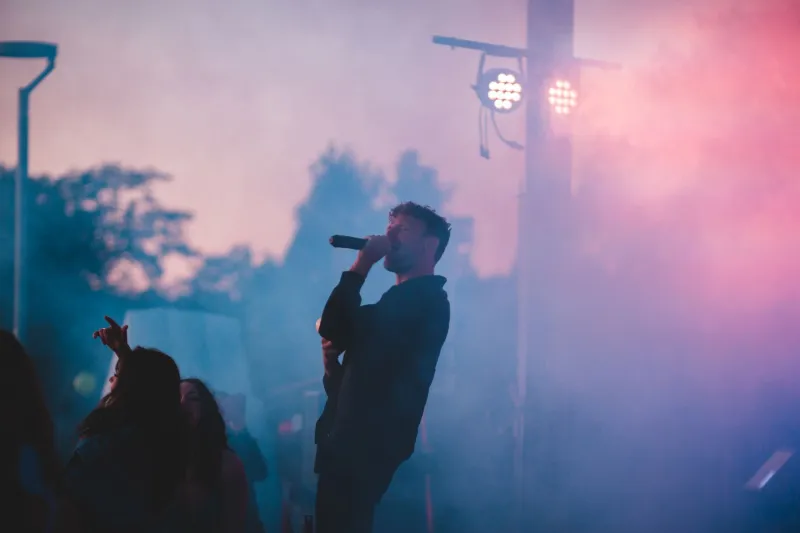
There's a moment that veteran talent scout Renee Calloway describes almost like a religious experience. She's standing at the back of an outdoor amphitheater somewhere in the Colorado Rockies, coffee in hand, watching a band she's never heard of tear through a forty-minute set to a crowd of maybe eight hundred people. By the time the last chord rings out across the valley, she's already reaching for her phone.
"In fifteen years of doing this, I've had more of those moments at mountain festivals than anywhere else," she says. "And I don't think that's a coincidence."
It isn't. Across the American West — and increasingly at European-inspired mountain festival destinations that have taken root in places like Telluride, Asheville, and the Adirondacks — a quiet revolution is reshaping how emerging artists get discovered. The arena circuit, long considered the golden escalator to mainstream success, is losing ground to something smaller, stranger, and frankly more interesting: the mountain stage.
Why Industry Insiders Keep Showing Up
Ask anyone who books talent for a living where they actually go to find new artists, and the answer might surprise you. It's not the club circuit in Nashville or the showcases in Austin, though those still matter. Increasingly, it's festivals tucked into river valleys and mountain passes, where the scenery is dramatic and the crowds are paying close attention.
The reasons are layered. For one thing, mountain festivals tend to attract audiences who actually listen. Without the background noise of a city venue — no traffic, no competing bars a block away, no subway rumble — the music becomes the main event in a way that's hard to replicate anywhere else. Crowds at these festivals are, almost by definition, committed. They drove two hours up a winding road, paid for a campsite, and hauled their gear through a parking lot the size of a small town. They are not there to scroll their phones.
"When an artist gets in front of that kind of audience, you see what they're really made of," says Marcus Holt, who curates programming for a mid-sized festival in the Blue Ridge Mountains. "There's nowhere to hide. The crowd is focused, the sound carries differently, and the intimacy means every mistake — and every moment of brilliance — lands harder."
That intimacy is key. Mountain venues, particularly the smaller stages that open each festival day, often seat or hold just a few hundred people. For an emerging artist used to playing half-empty clubs, that kind of captive audience can be transformative — and so can the visibility that comes with it.
The Acoustic Edge Nobody Talks About
Here's something the music industry doesn't advertise loudly: the physical environment of a mountain venue actively flatters a performer in ways that indoor stages simply don't. Open-air settings surrounded by natural terrain — rock faces, tree lines, hillsides — create a kind of organic reverb that adds warmth and dimension to live sound. An artist who sounds decent in a basement bar can sound genuinely stunning on a mountain stage.
For talent scouts who are trying to hear past a rough demo or an under-produced EP, that acoustic generosity matters. It allows them to assess raw talent without the interference of a bad PA system or a room that kills the low end. Several scouts we spoke with admitted, somewhat sheepishly, that they'd signed artists based on mountain festival performances only to find that the studio recordings needed significant work — but the talent was undeniably there.
"The mountain doesn't lie," Calloway says, laughing. "If you can hold a crowd in that environment, with those acoustics, you've got something real."
The Tastemaker Effect
Mountain festivals have developed a reputation, almost by accident, as gathering spots for a particular kind of music industry professional: the ones who are actually looking for something new. Playlist curators from major streaming platforms have been spotted at festivals in Vermont and Montana. Label A&R reps book vacation time around festival weekends in the Cascades. Sync licensing agents — the people who place music in films, TV shows, and commercials — have started treating certain mountain festivals the way fashion industry scouts treat small runway shows in Milan.
This concentration of tastemakers in an intimate setting creates a feedback loop that benefits emerging artists disproportionately. At a stadium show, an opening act is background noise. At a mountain festival, they might be sharing a communal dinner table with the person who has the power to change their career.
"I've had more meaningful conversations with industry people at mountain festivals than at any industry conference I've ever attended," says Dani Reyes, a singer-songwriter from Albuquerque who landed a sync deal and a booking agent after a single performance at a festival in the Sangre de Cristo Mountains. "There's something about the setting that breaks down walls. Nobody's performing for the room. Everyone's just there for the music."
Curation Over Volume
Another factor working in opening acts' favor at mountain festivals is the way these events are programmed. Unlike massive multi-stage festivals where dozens of acts compete for attention simultaneously, mountain festivals tend toward careful, intentional curation. Smaller lineups mean each act gets more promotional real estate — more mentions in the festival guide, more prominent placement on the website, more time in the spotlight.
Venue curators like Holt take this responsibility seriously. "I'm not filling slots," he says. "I'm building a program. Every artist on that lineup is there because I believe in them, and I make sure the audience knows that. When I introduce an opening act, I'm not just giving them a time slot — I'm vouching for them."
That curatorial stamp of approval carries weight with both audiences and industry professionals. Being selected for a well-regarded mountain festival is itself a form of validation, a signal that someone with taste and credibility has already vetted the act. It's the kind of endorsement that's hard to manufacture on social media and impossible to buy.
What Comes After the Mountain
For artists who break through at mountain festivals, the aftermath tends to move fast. Reyes's sync deal led to a publishing contract within six months. A folk duo from Portland that turned heads at a festival in the White Mountains of New Hampshire signed with an indie label and released their debut album the following spring. A twenty-three-year-old guitarist from Bozeman, Montana, went from playing local coffee shops to opening for a nationally touring act after a single viral video shot during his mountain festival set.
None of these stories are flukes. They're the predictable output of an environment that's been quietly optimized — by geography, acoustics, curation, and audience — for genuine discovery.
Mountain stages don't promise anything. The altitude is indifferent, the weather unreliable, and the crowds are small by industry standards. But for an emerging artist willing to make the climb, the view from up there has a way of changing everything.
The mountains, it turns out, have always been pretty good at revealing what's real.