Safer by Nature: The Unexpected Reason Mountain Concerts Have Fewer Incidents Than City Arenas
When most people think about heading to a mountain music festival, safety probably isn't the first thing that comes to mind. They're thinking about the lineup, the lodge vibes, maybe whether they packed enough layers. But here's something that doesn't get nearly enough airtime: mountain concert venues consistently log lower incident rates than their urban counterparts — and the reasons why are way more interesting than a simple headcount.
We dug into event safety data, talked to venue security directors, and caught up with emergency responders who've worked both sides of the fence — packed downtown amphitheaters and wide-open alpine stages. What they told us might change how you think about where you choose to catch your next show.
Room to Breathe (Literally and Figuratively)
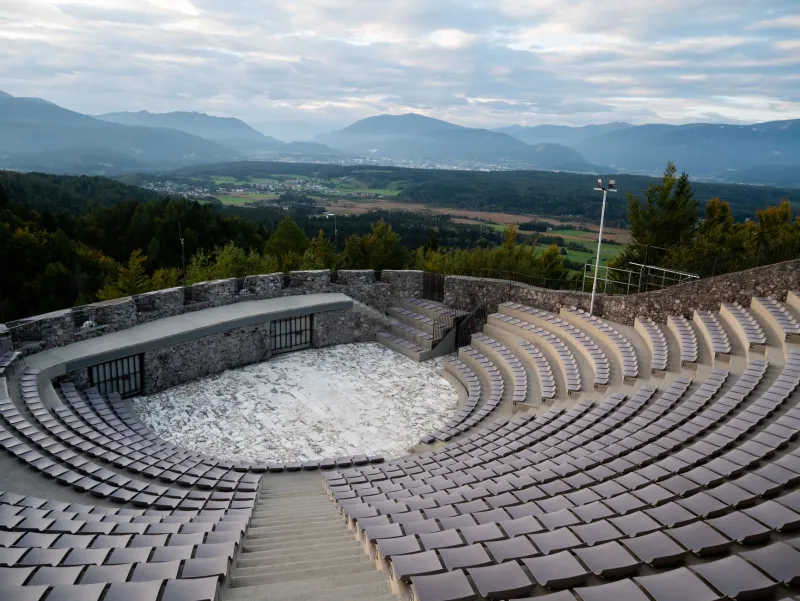
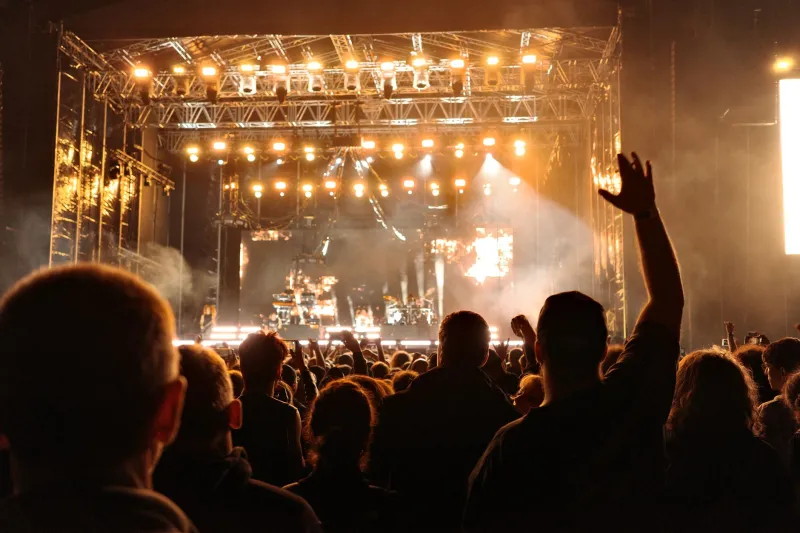
The most obvious difference between a mountain festival and, say, a 20,000-seat arena in the middle of a city is density. Urban venues are engineered to pack in as many bodies as possible. It's a revenue model, plain and simple. Mountain venues, by contrast, are constrained by terrain — and that constraint turns out to be a genuine safety asset.
"When you have natural topography dictating your layout, you end up with organic crowd separation," says one venue operations director who oversees events at a Colorado mountain amphitheater and asked not to be named due to contractual reasons. "People spread across hillsides, cluster near trees, find their own pockets. You rarely get the kind of compression that leads to crowd crush situations."
Crowd crush — the dangerous phenomenon where pressure from a dense crowd becomes physically dangerous — has been behind some of the most tragic concert incidents in recent memory. The physics are brutal: once density exceeds about four to five people per square meter, individuals lose the ability to move voluntarily. Mountain venues almost never reach those thresholds. The terrain simply won't allow it.
Natural Flow Patterns Do the Heavy Lifting
Urban venues are typically built around a single main entrance and exit, which creates predictable bottlenecks. Mountain festival grounds tend to have multiple access points spread across uneven terrain, which naturally distributes foot traffic.
Jamie Kowalski, a crowd safety consultant who has worked events from Red Rocks Amphitheatre in Colorado to outdoor stages in the Bavarian Alps, puts it plainly: "City venues funnel people. Mountain venues scatter them. Scattering is almost always safer from a crowd dynamics standpoint."
That scattering effect means that even during the post-show rush — historically the most dangerous window at any large event — mountain festival crowds tend to self-regulate. People head toward different parking areas, different trailheads, different shuttle stops. The pressure releases in multiple directions at once rather than slamming into a single exit corridor.
The Altitude Factor Nobody Talks About
Here's where it gets a little counterintuitive. You might assume that high altitude would increase incident rates — thinner air, more dehydration risk, altitude sickness for visitors who aren't acclimated. And sure, those are real considerations. But experienced alpine event medics say the altitude factor cuts both ways.
"People who come to mountain festivals tend to be more physically self-aware," says one EMT who has staffed medical tents at multiple high-elevation Colorado events. "They know they're at altitude. They drink more water. They pace themselves. Honestly, the crowd behavior is just more mindful than what I see at sea-level arena shows."
There's also a cultural component baked into the mountain festival experience. The alpine aesthetic — the slower pace, the emphasis on outdoor wellness, the community feel — tends to attract a crowd that's less inclined toward the aggressive behavior that can escalate into incidents at high-energy urban shows.
What the Numbers Actually Say
Hard cross-venue safety data is notoriously difficult to obtain — venues aren't exactly eager to publish incident logs — but industry insiders point to a consistent pattern. Events with similar attendance figures held at mountain sites versus urban arenas show measurable differences in reported incidents, particularly in categories like crowd-related injuries, altercations, and medical emergencies requiring outside intervention.
A 2019 report from the Event Safety Alliance noted that outdoor festival environments with distributed crowd flow and lower density consistently outperformed enclosed or high-density venues on key safety metrics. Mountain festivals, almost by definition, check both of those boxes.
Kowalski is careful not to oversell the data. "Mountain venues aren't immune to incidents. You can have a bad night anywhere. But the structural conditions — the space, the flow, the crowd culture — stack the odds in a better direction."
What Urban Venues Are Starting to Steal
The irony is that some of the most progressive safety upgrades happening at urban venues right now are directly inspired by mountain festival design principles. Wider concourse spacing, distributed entry points, reduced general admission density caps — these are all moves that alpine venues have been doing by default for decades.
A handful of major US arenas have quietly brought in outdoor festival safety consultants to help rethink their crowd management approaches. The goal isn't to turn a downtown arena into a mountain meadow, obviously. But the underlying logic — give people space, create multiple flow paths, reduce compression — translates.
"Urban venues are finally accepting that density isn't just a capacity question, it's a safety question," says Kowalski. "Mountain festivals figured that out a long time ago, mostly because they had no choice."
The Takeaway for Festival Travelers
None of this means you should skip your favorite city arena show or that mountain festivals are some kind of risk-free utopia. Every large event carries inherent challenges, and altitude introduces its own set of considerations — stay hydrated, take it easy on the first day if you're not acclimated, know where the medical tents are.
But if you've been on the fence about making the trip to a mountain festival — whether that's a summer weekend in the Rockies or eventually working your way toward one of Europe's legendary alpine stages — here's one more reason to go. The environment that makes those shows feel so magical also happens to be working quietly in the background to keep you safer.
The mountains, it turns out, aren't just good for the acoustics.