Plug In, Tune Up, Climb Higher: How Pro-Grade Audio Is Finding Its Way Into the Most Remote Mountain Venues

There's a lodge tucked into the foothills outside Telluride, Colorado that seats maybe 180 people on a good night. The walls are rough-hewn timber. The bar serves local craft beer and something warm with a vague cinnamon situation going on. And the sound system — the sound system would make the tech director of a 10,000-seat arena stop mid-sip and ask questions.
That's not an accident. A growing number of independent sound engineers across Colorado, Utah, and California's Sierra Nevada range are quietly retrofitting small mountain venues with professional-grade audio equipment, turning what used to be acoustically inconsistent spaces into genuinely impressive listening rooms. It's a trend that's been building for a few years, but lately it's started to pick up serious momentum — and it's changing the calculus for touring artists, audiophile audiences, and venue owners alike.
The Problem With Pretty Rooms
Anyone who's been to a live show in a mountain lodge knows the feeling. The setting is gorgeous. The vibe is unmatched. But the sound? Sometimes it's a wall of mud bouncing off exposed wood beams, or a thin, tinny mix that makes a six-piece band sound like it's playing through a laptop speaker.
Historically, intimate mountain venues just weren't built with acoustics in mind. They were built to look good and stay warm. The audio was an afterthought — a rental PA dragged in for the weekend and set up by whoever was available. For years, that was just accepted as part of the trade-off. You got the mountains; you dealt with the sound.
But a new generation of sound engineers — many of them veterans of major touring circuits who've deliberately stepped off the arena treadmill — aren't accepting that trade-off anymore. They're bringing their expertise to smaller rooms and using it to solve problems that used to seem unsolvable.
What's Actually Going Into These Rooms
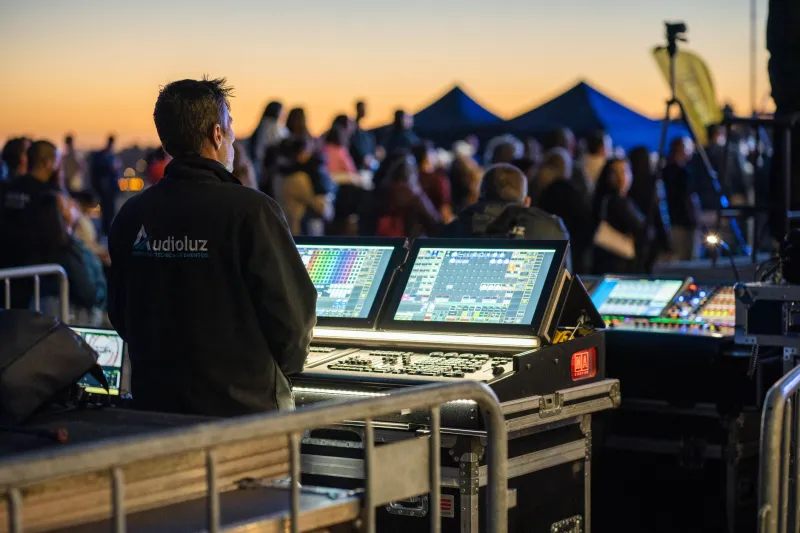
The technology driving this shift isn't magic, but it is genuinely impressive. Line array speaker systems — the kind you'd typically see hanging above a stadium floor — now come in compact configurations that can be tuned precisely for low-ceiling, irregular spaces. Digital signal processors (DSPs) allow engineers to map a room's acoustic quirks and compensate for them in real time. Wireless in-ear monitoring systems mean performers aren't fighting stage monitors for sonic real estate.
Companies like d&b audiotechnik, L-Acoustics, and Meyer Sound have all expanded their smaller-format product lines in recent years, and that's made it more practical to outfit a 200-cap room with gear that punches well above its weight class. Add in the fact that installation costs have dropped as the technology has matured, and suddenly the math starts working for venue owners who previously couldn't justify the investment.
In Park City, Utah, at least two venues have completed full audio overhauls in the last 18 months. Up in the Sierra Nevada foothills, a converted barn near Truckee that hosts everything from bluegrass nights to intimate electronic sets recently went through a similar transformation. The owners in both cases say the same thing: audiences noticed immediately, and bookings improved within weeks.
Why Touring Acts Are Paying Attention
Here's the thing about artists who've spent time on the major touring circuit — they know what good sound feels like, and they know how rarely they actually get it. Big arenas are notoriously difficult acoustic environments. Sound bounces everywhere. Mix engineers spend half their time fighting the room instead of shaping the music. The artist hears something on stage that bears almost no resemblance to what the audience hears out front.
A well-tuned small room is a completely different experience. When the monitoring is dialed in and the front-of-house system is actually matched to the space, musicians can hear themselves clearly, play more dynamically, and connect with an audience that's close enough to make eye contact. Several touring acts who've played upgraded mountain venues in Colorado and California have started specifically requesting them on routing plans — not because they pay the best guarantees, but because they deliver some of the most satisfying performances.
For artists who are also audiophiles — and there are more of them than you'd think — the idea of playing a room where the sound has been genuinely engineered, not just set up and hoped for, is a real selling point.
The Audiophile Audience Is Showing Up
On the other side of the equation, listeners who care deeply about sound quality are finding mountain venues increasingly worth the drive. There's a growing community of music fans — call them audiophiles, or just people who've spent enough money on nice headphones to know the difference — who are actively seeking out venues where the audio experience has been taken seriously.
Mountain venues with upgraded systems are starting to market directly to this crowd, and it's working. Ticket prices at some of these rooms have crept up alongside the audio improvements, and audiences are paying without much complaint. When you can genuinely hear the room, the dynamics, the breath between notes — that's a different kind of live music experience than what most people are used to, and it's one that's hard to replicate at scale.
There's also something about the Alpine aesthetic — the warmth of the space, the intimacy, the sense that you're somewhere specific and a little bit special — that makes the audio quality land differently. Good sound in a beautiful room hits harder than good sound in a generic black-box venue. The setting and the sonics are reinforcing each other.
What This Means for the Bigger Picture
The broader implication here is that the gap between major venues and independent ones is narrowing in ways that could genuinely reshape how live music gets distributed across the country. If a lodge in Telluride or a converted barn near Lake Tahoe can deliver an audio experience that rivals what you'd get at a mid-size city venue, the geographic calculus for both artists and audiences starts to shift.
Mountain towns that invest in this infrastructure are essentially building a competitive moat. They already have the scenery, the culture, and the sense of occasion. Add genuinely world-class sound, and they're no longer asking audiences to compromise — they're offering something that bigger, more conventional venues can't easily replicate.
For the sound engineers doing this work, it's also a kind of creative reclamation. These are people who spent years making arenas sound passable and are now making small rooms sound extraordinary. The scale is different, but the satisfaction — by most accounts — is considerably higher.
The mountains have always had something the cities couldn't manufacture. Turns out, with the right equipment and the right expertise, they can have the sound to match.