The Back Door to America: Why International Acts Are Trading Stadium Dreams for Mountain Stages
For decades, the playbook for breaking America as an international artist looked roughly the same: sign with a US label or distributor, land a late-night television spot, get added to a major festival's undercard, and pray that the machinery of mainstream radio picked up the signal. It was expensive, unpredictable, and notoriously brutal on artists who weren't already famous somewhere else.
That playbook is being quietly rewritten. And some of the most interesting edits are happening at altitude.
A Different Kind of American Dream
Over the past several years, a handful of European and international acts have discovered something that the traditional music industry apparatus wasn't set up to tell them: American mountain festivals offer a remarkably efficient path to building a genuine US fanbase. Not a manufactured one. Not a bought-and-paid-for one. A real one, built on actual human connection in a setting that practically demands it.
The logic isn't immediately obvious until you've spent time at one of these events. Mountain festivals attract a specific kind of attendee — curious, adventurous, willing to spend real money to be somewhere remote and uncomfortable in exchange for an experience that feels earned. These are not passive consumers. They're active participants in the culture of the event, and they talk. They post. They evangelize.
"We played a festival in the Rockies about two years before we had any real US presence," says a Norwegian indie pop duo who have since developed a dedicated American following. "We expected maybe a hundred people who had no idea who we were. What we got was five hundred people who became obsessed overnight. We sold out of merch by day two. That never happened to us in Oslo."
Why Mountain Festivals Work for Outsiders
There are several structural reasons why high-altitude American festivals serve international acts better than the conventional entry points.
First, the barrier to entry is lower. Booking a slot at a boutique mountain festival requires significantly less industry infrastructure than landing a spot on a major arena tour or a high-profile city festival. For an act without US management, a US booking agent, or a US label relationship, the mountain festival circuit is genuinely accessible in a way that Madison Square Garden is not.
Second, the audience is primed for discovery. People who travel hours to a remote mountain venue aren't going to stand through an opening set scrolling their phones waiting for the headliner. They're there for the whole experience, which means every act on the bill gets a fair hearing. For an international artist without name recognition, that's enormous.
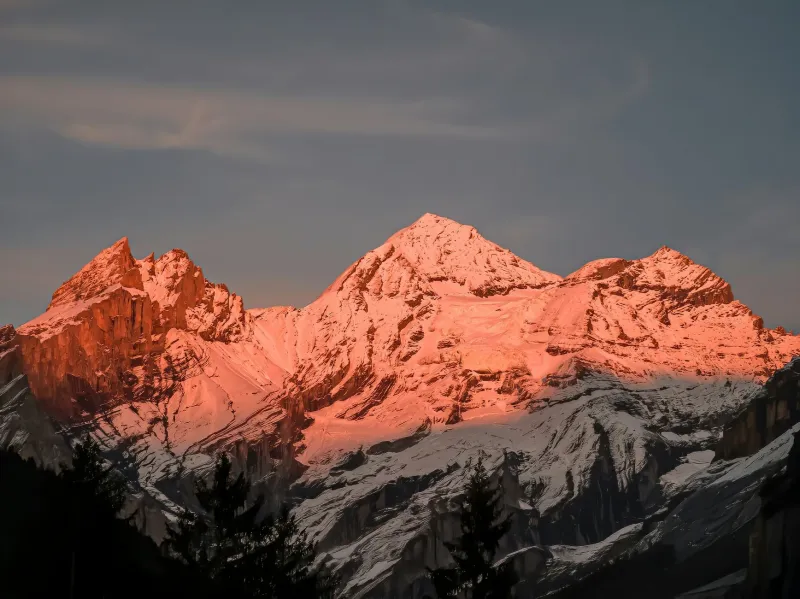
Third — and this is the part that's changed most dramatically in the past five years — the social media math is wildly favorable. A genuinely transcendent performance at a scenic mountain venue generates content that travels. A video of an unknown Swedish folk band absolutely destroying a crowd against a backdrop of pine-covered peaks and an alpine sunset doesn't need a PR team behind it. It moves on its own.
"We had a clip from our set go to about four million views in a week," recalls one British singer-songwriter who performed at a small Colorado festival as a virtual unknown in the US. "The mountains were visible behind me, the crowd was going crazy, and the whole thing looked like a movie. I booked three more US dates from the DMs I got in the following 48 hours."
The Risk Calculation
For international acts considering their first serious American push, the financial calculus of a mountain festival engagement versus a traditional market-entry strategy is striking. A US stadium tour debut requires the kind of investment in promotion, logistics, and infrastructure that most emerging international artists simply don't have. The downside risk is enormous — poor ticket sales in a major market can define an artist's American narrative before it's had a chance to develop.
Mountain festivals flip that equation. The audience is self-selected and receptive. The production costs are shared across the festival's infrastructure. The intimate scale means that even a modest crowd response feels significant. And if the show doesn't land perfectly, the consequences are contained — there's no New York Times review waiting to file copy by midnight.
"The risk profile is completely different," explains one European booking agent who has begun routing several of her acts through US mountain festivals as deliberate market-entry strategy. "In a city show, if the room is half empty, everyone knows. At a mountain festival, you're one of fifteen acts across a weekend, the vibe is built into the environment, and the audience wants you to win. It's a much more forgiving first date with a new market."
Building the Bridge
Beyond the immediate performance opportunity, mountain festivals offer something that traditional market-entry strategies rarely provide: time. The multi-day format of most mountain festivals means artists aren't just playing a set and catching a flight. They're camping, eating, and wandering around the same grounds as the fans who just watched them perform. Those informal interactions — the conversation at the food truck, the impromptu acoustic session by the fire — build the kind of fan relationship that no amount of algorithmic promotion can replicate.
For international artists who are already accustomed to the close-knit music cultures of smaller European countries, this format feels familiar in a way that the American arena circuit does not. The scale is human. The interactions are genuine. The whole thing operates more like the folk and world music festivals of Scandinavia or the UK than like anything in mainstream American entertainment.
"It felt like home, which was the last thing I expected in Colorado," says one Dutch singer who made her first US appearance at an alpine festival in the Rockies. "The audience was engaged in the same way European festival audiences are. They were there to listen, not just to party. I understood that crowd immediately."
The Route Is Getting Crowded
Word travels fast in music industry circles, and the mountain festival circuit as an international entry point is no longer quite the secret it was three or four years ago. Bookers at several well-regarded alpine festivals report a significant uptick in submissions from European and international acts specifically citing the US market-building opportunity in their pitch materials.
For the festivals themselves, this creates both opportunity and responsibility. The best of them are leaning into it thoughtfully — curating international acts that genuinely fit the vibe of the event rather than simply filling slots with whoever has the most interesting passport. The goal, as one festival director put it, is to create a genuine cultural exchange rather than a conveyor belt.
For the artists making the journey, the mountains offer something the traditional American music industry rarely has: a genuine chance to be heard before you're famous enough to be ignored. Up here, between the peaks and the pines, the music still has to earn it. And for international acts with something real to say, that turns out to be exactly the kind of stage they were looking for.