Peaks, Posts, and Presence: How Mountain Venues Became Gen Z's Favorite Place to Disappear
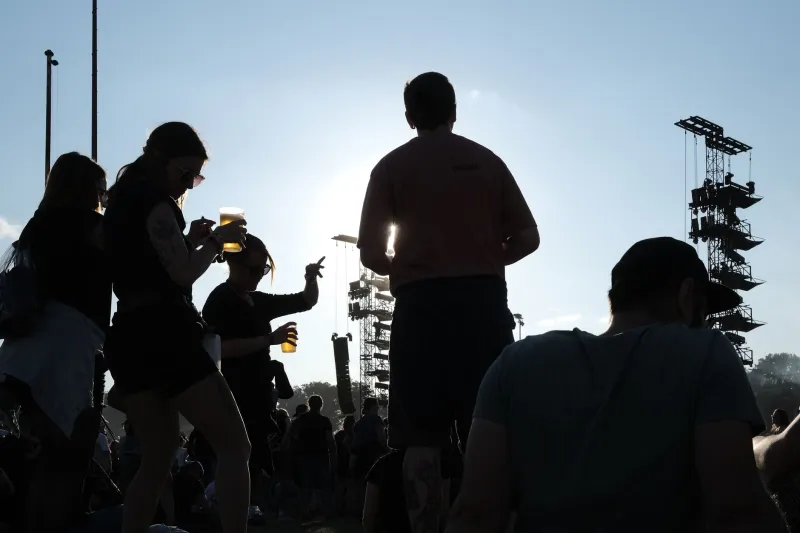
There's a certain kind of photo that keeps showing up on social feeds lately. It's not a stadium shot with a sea of phone flashlights. It's not a blurry arena floor selfie. It's a person, usually in their early twenties, standing somewhere improbably high up, a small stage glowing behind them, mountains stretching out into the dark. The caption is usually something understated. "Worth it." Or just a single mountain emoji.
That photo? It's doing more for alpine festival culture than any ad campaign ever could.
Gen Z — roughly anyone born between 1997 and 2012 — has grown up with infinite access to live music content. They've seen every angle of every arena tour. They've watched festival streams in real time. And somewhere along the way, a lot of them decided that watching isn't the same as being there, and being there isn't the same as being somewhere that actually means something.
Mountain venues, it turns out, mean something.
The Authenticity Problem — and How Altitude Solves It
Ask any event marketer what Gen Z wants, and the word "authentic" comes up within thirty seconds. It's become almost a cliché. But strip away the buzzword and there's a real tension underneath: this generation has an extremely sensitive radar for anything that feels manufactured, packaged, or designed purely for consumption.
A 20,000-seat arena with corporate naming rights and $18 beers? That radar goes off immediately.
A 500-person outdoor stage at 9,000 feet, where the artist did a soundcheck this morning and you could actually hear them talking? Different story entirely.
Venue operators in mountain communities across Colorado, Montana, and the Pacific Northwest have figured this out — some by design, some by happy accident. The intimacy that comes with remote locations isn't a bug. It's the whole product. When you can't scale a venue beyond a few hundred people because that's genuinely all the mountain can hold, the scarcity isn't manufactured. It's real. And Gen Z can tell the difference.
"We don't have to work very hard to convince people this is special," says one event coordinator at a small Colorado venue who's been booking shows for about six years. "The mountain does that work for us. We just have to not screw it up."
FOMO Has Evolved — And It's Pointing Uphill
FOMO — fear of missing out — has been analyzed to death as a Gen Z trait, usually in a negative context. But there's a version of FOMO that's actually healthy, even aspirational: the desire to be part of something that genuinely can't be replicated.
A Taylor Swift stadium show can be streamed, filmed, and experienced secondhand in a dozen ways. A 400-person mountain concert during an unexpected light snowfall, with an artist who decided to extend their set because the crowd was too good to leave — that moment exists exactly once. And the people who were there know it.
This is the psychology that alpine festival organizers are increasingly leaning into. Not manufactured exclusivity, but real scarcity. Limited tickets, remote locations, experiences that depend on weather, elevation, and the specific energy of a specific night. You can't buy a Blu-ray of that.
Social media amplifies this dynamic in a fascinating way. When someone posts from a mountain venue, the post itself carries proof of effort. Getting there required something — a drive, a hike, a commitment. That context makes the content more compelling. It signals: I didn't just swipe a ticket on my phone. I showed up.
Sustainability as a Non-Negotiable
Here's where mountain venues have a structural advantage that urban venues simply can't manufacture: they are, by necessity, deeply invested in environmental stewardship.
A festival in a mountain ecosystem can't afford to trash the place. The communities surrounding these venues depend on natural beauty for their livelihoods. The audiences coming to these events are often hikers, skiers, and outdoor enthusiasts who care about leave-no-trace principles as a baseline life value. The whole thing self-selects toward sustainability in a way that a parking-lot arena show in a mid-size city just doesn't.
Smart venue operators have taken this further, building sustainability into their brand identity rather than treating it as a compliance checkbox. Solar-powered stages, partnerships with local farms for food vendors, composting programs, shuttle systems that cut down on individual car traffic — these aren't afterthoughts. They're selling points. And for Gen Z audiences who rank environmental values consistently high in survey after survey, they matter.
It's not about greenwashing. These audiences can spot that too. It's about venues whose operational reality actually aligns with the values they're claiming. In the mountains, that alignment is a lot easier to achieve honestly.
Community Over Crowd
One of the most consistent things Gen Z reports about their ideal event experience is a sense of community — not just proximity to a lot of other people, but actual connection. The feeling of being around people who chose to be here for the same reasons you did.
Mountain festivals, almost by default, create this. When you've all driven three hours, navigated a switchback road, and set up camp at elevation, you've already done something together before the first note plays. There's a shared context that flattens the usual social awkwardness of large events. People talk to each other. They share gear, food, sunscreen. They complain about the altitude and laugh about it.
Venue operators who understand this are designing for it deliberately — communal fire pits, shared meal areas, programming that happens between sets and not just during them. The concert is the anchor, but the experience extends well beyond the stage.
What This Means for the Future of Live Music
The shift isn't total. Stadium tours aren't going anywhere. But the mountain venue model is quietly proving something important: there's a substantial, engaged, and economically active audience that will travel farther, pay more, and plan further ahead for an experience that feels genuinely irreplaceable.
Gen Z isn't rejecting live music. They're raising the bar for what live music has to be. And right now, the venues that are clearing that bar most consistently are the ones sitting at 8,000 feet, where the air is thin and the moments hit harder.
The altitude advantage is real. And it's only getting more valuable.