Once You Go Alpine, You Never Go Back: The Secret Behind Multi-Day Mountain Festivals and Their Insanely Loyal Crowds
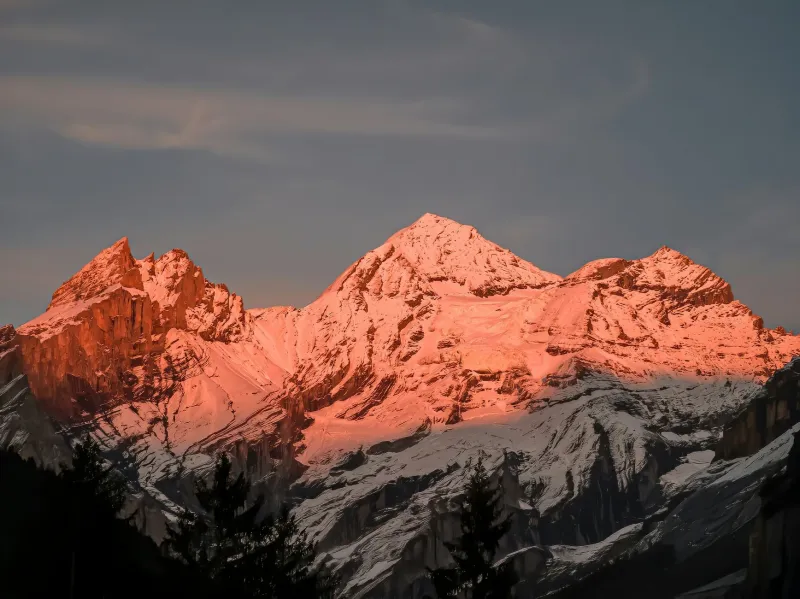
Ask anyone who's attended a multi-day mountain festival what keeps them coming back, and you'll get a pause before the answer. Not because they don't know — but because it's hard to put into words. Something about being up there, surrounded by peaks and pine trees and a few thousand people who all made the same deliberate choice to be somewhere inconvenient and completely worth it, just sticks with you in a way that a weekend in a city parking lot simply doesn't.
The numbers back this up. Mountain festival organizers across the country are quietly reporting repeat attendance rates that would make urban event promoters do a double-take. While big-city multi-day events often chase fresh audiences each year — partly out of necessity, partly because of high turnover — alpine festivals are filling a significant chunk of their capacity with returning attendees before a single act is even announced. That's not a fluke. That's loyalty, and it's worth understanding.
The 'Escape Pod' Effect Is Real — and Urban Events Can't Fake It
Let's start with the most obvious factor: geography. When you drive three hours into the mountains, book a cabin, haul your gear up a trail, and plant your flag at a festival site that took real effort to reach, you've already made a psychological commitment that a 20-minute Uber ride to a downtown event simply can't produce.
Festival researchers and event psychologists have a name for this kind of friction-as-investment dynamic. The harder something is to get to, the more meaningful the experience feels once you're there. Mountain festivals benefit enormously from this. Attendees aren't just buying a ticket — they're buying into a whole journey. And journeys, as any good storyteller knows, are what people remember and repeat.
City festivals, for all their convenience, can't manufacture that. You can build a fake Alpine lodge in the middle of Phoenix (and yes, some people have tried), but you can't replicate the feeling of being genuinely removed from your regular life. The mountains do that automatically.
Community at Altitude Hits Differently
Here's something that doesn't get talked about enough: mountain festivals tend to attract a self-selecting crowd. The people willing to deal with limited cell service, altitude adjustment, and a two-hour drive on a winding road are, almost by definition, people who really want to be there. That shared intentionality creates a community vibe that's genuinely hard to replicate at a more accessible event.
Over time, that community compounds. Return attendees start recognizing each other. Inside jokes form. Traditions develop — the same campfire spot, the same pre-show hike, the same late-night singalong that somehow happens every year. These micro-rituals are social glue, and they're one of the most underrated reasons people keep coming back.
Some mountain festivals have gotten smart about actively nurturing this. Early-access ticket tiers for returning attendees, alumni meetups, even dedicated camping zones for multi-year veterans — these aren't just perks, they're community architecture. They send a clear signal: you belong here, and we remembered you came last year.
Nature Does the Heavy Lifting That Stages Can't
There's also a straightforward sensory argument for why mountain festivals outperform city events in retention. Sunsets over ridgelines. The smell of pine and woodsmoke mixing with whatever's cooking at the food vendor two stalls down. The way sound travels differently at elevation, giving every performance a slightly surreal quality that audiophiles and casual listeners alike notice, even if they can't explain why.
Nature provides a backdrop that no production budget can fully replicate. And because that backdrop changes — different light each day, different weather, different wildlife cameos — a three-day mountain festival never quite feels repetitive, even when the schedule is packed. There's always something happening that isn't on the program.
Urban festivals, by contrast, are fighting against their environment as often as they're working with it. Traffic noise, light pollution, concrete heat, the general sensory overload of a city in full swing — these aren't neutral factors. They're friction points that chip away at immersion, even when the music is great.
The Logistics of Loyalty: Why Staying On-Site Changes Everything
One of the structural advantages mountain festivals have over city events is the on-site accommodation model. When attendees are camping, glamping, or staying in nearby lodges rather than commuting back to a hotel each night, the festival becomes a total environment rather than just a series of performances.
That matters more than it might seem. The conversations that happen after the headliner wraps, the spontaneous acoustic sets in someone's campsite, the breakfast shared with strangers who become friends — these are the experiences people actually talk about when they get home. And they're overwhelmingly more likely to happen when everyone is sleeping in the same meadow.
City festivals struggle to create this because, by design, most attendees leave at the end of each day. The community disperses. The magic has a hard stop. Mountain festivals, especially those with strong on-site lodging options, let that magic breathe across multiple days in a way that builds genuine attachment.
What Festival Organizers Are Learning — and Fast
The smarter operators in the mountain festival space are paying close attention to what drives that repeat attendance, and they're building their entire event philosophy around it. That means prioritizing experience design over pure lineup prestige, investing in the between-the-sets moments as much as the main stage, and treating returning attendees as stakeholders rather than just ticket buyers.
It also means resisting the temptation to scale up too fast. One of the consistent themes from loyal mountain festival attendees is that intimacy matters. The moment a festival starts to feel like a stadium show that happens to be outdoors, some of the magic evaporates. The best mountain events understand that their size is part of their product.
There's a lesson in that for the broader live events industry. Loyalty isn't bought with bigger headliners or flashier production — it's earned through repeated, genuine experiences that make people feel like they're part of something. The mountains, it turns out, are very good at that.
The Bottom Line
Multi-day mountain festivals aren't winning the loyalty battle by accident. They're winning it because the combination of natural immersion, genuine community, logistical commitment, and sensory richness creates something that city events — for all their resources and accessibility — consistently struggle to match.
If you've been to one of these events and found yourself already planning next year's trip before you've even gotten back to cell service, you already know this. The altitude advantage is real, and it goes a lot deeper than just the view.