Flatlands With a View: The Surprising Rise of Fake Alpine Venues Across America
There's a venue outside Nashville — dead flat land, zero elevation change, not a natural rock formation in sight — where the entrance is framed by two massive timber posts carved to look like they were hauled down from a Bavarian hillside. String lights zigzag overhead. The bar serves mulled cider year-round. A mural of snowcapped peaks stretches across the back wall of the main stage. And on a Friday night, when the crowd is packed in and the band is rolling, you'd almost swear you were somewhere in the Tyrolean foothills.
You're not, obviously. You're in Tennessee. But that's kind of the whole point.
The Illusion Is the Product
Across the country, a quiet but unmistakable design movement is reshaping how smaller and mid-size live music venues approach their physical spaces. Owners who can't claim a mountain zip code are increasingly borrowing the visual and sensory language of Alpine culture — heavy timber construction, warm Edison lighting, natural stone accents, chalet-style rooflines, and a general aesthetic that whispers cozy European escape — and transplanting it into places that have no geographic right to any of it.
It sounds gimmicky. In some cases, it absolutely is. But the trend is real, it's growing, and the psychology behind it says a lot about what American audiences are actually hungry for when they walk into a live music space.
"People don't just want to hear a band," says one venue designer who's worked on projects in Colorado's eastern plains, suburban Atlanta, and central Texas. "They want to feel transported. The mountain thing taps into something deep — it feels remote, it feels special, it feels like you earned being there somehow, even if you drove 20 minutes from your apartment."
Why Alpine, Specifically?
It's worth asking why the Alpine aesthetic has become the shorthand for elevated live music experience in the American market. Part of it is aspirational tourism — European mountain destinations like Innsbruck, Chamonix, and Interlaken have spent decades cultivating a reputation for combining breathtaking natural settings with genuinely excellent food, drink, and cultural programming. American travelers who've been to these places come home wanting to recreate the feeling. Those who haven't seen enough Instagram posts to want the same thing.
There's also a nostalgia angle that's hard to ignore. Alpine design — all that warm wood, natural texture, and handcrafted detail — reads as the opposite of the cold, industrial aesthetic that dominated venue design through the 2000s and early 2010s. Exposed concrete and reclaimed steel were everywhere for a while. Now audiences seem to be swinging back toward warmth, toward texture, toward spaces that feel like someone actually thought about comfort.
And then there's the escapism factor, which venue owners will talk about openly if you ask them. Post-pandemic, people want experiences that feel genuinely removed from everyday life. A convincing Alpine setting — even a manufactured one — provides a mental off-ramp that a plain black-box venue simply can't.
What Actually Works (And What Doesn't)
Here's where things get interesting, because not all Alpine theater is created equal. Spend enough time in these venues and you start to notice a clear divide between the design elements that genuinely affect how a show feels and the ones that are purely cosmetic.
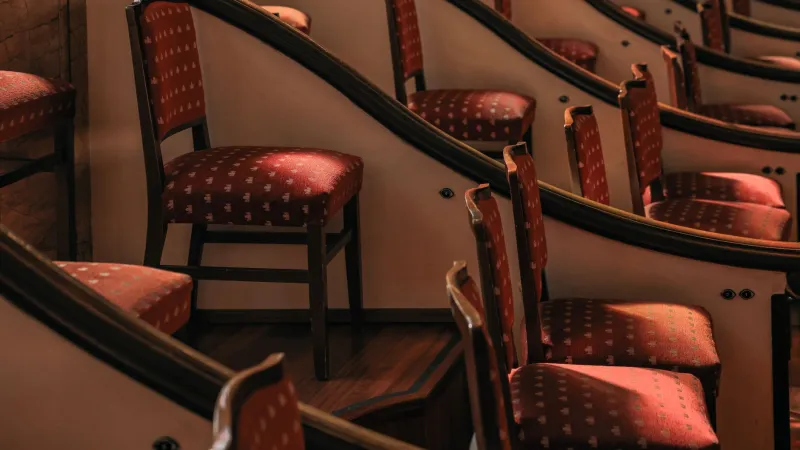
Acoustic warmth is real. Heavy timber construction, wood paneling, and natural material surfaces don't just look like a mountain lodge — they actually behave like one, acoustically speaking. Hard, flat surfaces create harsh reflections. Textured wood absorbs and diffuses sound in ways that can make a mid-size room feel more intimate and less echo-y. Venue owners who understand this are making design choices that improve the actual listening experience, not just the Instagram potential.
Ceiling height and sightlines matter enormously. Authentic Alpine performance spaces — think festival stages tucked into valley amphitheaters or barn-converted concert halls — tend to have dramatic vertical proportions. When designers replicate this in flatland venues, they create a sense of openness and grandeur that genuinely changes how audiences experience a show. Drop ceilings do the opposite, regardless of what's painted on them.
Ambient scent and temperature are underrated. Some of the better-executed Alpine-themed venues pipe in subtle wood smoke or pine scent through their HVAC systems and keep the space slightly cooler than a typical bar environment. It sounds absurd, but sensory cues like these contribute meaningfully to the feeling of being somewhere other than where you are.
Murals and props are mostly theater. A painted mountain backdrop is fine. It sets a mood. But it doesn't change how music sounds, how comfortable the seating is, or whether the sightlines are good. Venues that lean too hard on decorative elements while neglecting functional ones tend to feel like a theme restaurant — charming for about 20 minutes, then kind of hollow.
The Business Case
Venue owners aren't doing this purely out of aesthetic passion. There's a real commercial logic to the Alpine positioning, particularly in markets where live music competition is fierce.
A themed environment creates a distinctive identity that's easy to market and easy for audiences to remember. "I went to that mountain-lodge place" is a more shareable sentence than "I went to that venue downtown." In the age of social media-driven event discovery, a visually distinctive space is a genuine competitive asset.
These venues also tend to command slightly higher ticket prices and drink minimums, because the overall experience feels more curated. Audiences who've bought into the Alpine fantasy are, psychologically speaking, already primed to spend a little more — they've mentally committed to an experience rather than just a show.
And perhaps most importantly, the aesthetic tends to attract a slightly older, more affluent demographic that's less price-sensitive and more loyal once they find a venue they like. That's a valuable audience to cultivate.
The Authenticity Question
The obvious critique of all this is that it's fake — manufactured atmosphere sold to people who want to feel like they've done something more adventurous than drive to a suburban strip mall. And that critique isn't entirely wrong.
But authenticity in live entertainment has always been more complicated than it looks. Every concert venue is a constructed experience. The lighting, the sound system, the layout of the bar — all of it is designed to create a specific feeling. Alpine-themed venues are just more explicit about the fiction they're selling.
And if that fiction makes people feel something real — a sense of escape, of warmth, of being somewhere worth being — then it's doing exactly what a good venue is supposed to do.
The mountains, after all, have always been as much an idea as a place. If a venue in the Tennessee flatlands can conjure that idea convincingly enough that you forget, for a couple of hours, exactly where you are? That's not a mirage. That's just good design.