Glühwein, Grass Roots, and Good Music: The American Towns Reinventing Alpine Festival Culture
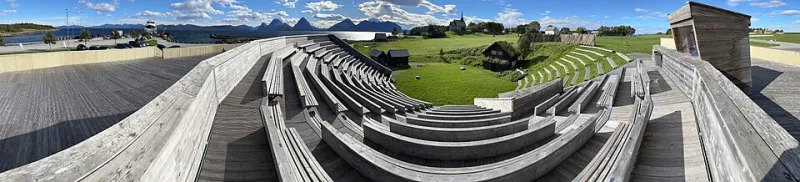
Photo: Dietmar Rabich, CC BY-SA 4.0, via Wikimedia Commons
There's a version of festival culture that doesn't involve a $400 ticket, a three-hour shuttle line, or a lineup that looks identical to every other major event that summer. You'll find it tucked into the mountain towns of Colorado, Wyoming, and beyond — places that have quietly been doing something genuinely interesting with their summer (and increasingly, their fall) event calendars.
They're not trying to be Coachella. They're not even really trying to be Glastonbury. They're drawing from something older and more communal: the Alpine festival traditions of central Europe, where villages have gathered for music, food, and seasonal celebration for centuries. And somehow, in places like Telluride, Aspen, and Jackson Hole, it's working.
Why European Festival Culture Translates So Well to American Mountain Towns
The connection isn't as forced as it might sound. American mountain towns and their European counterparts share a lot of the same raw material: dramatic terrain, tight-knit communities built around seasonal rhythms, and a visitor economy that thrives on experience rather than pure luxury.
"There's a reason people keep making the comparison," says Dana Willoughby, who helps coordinate programming for a summer music series in Telluride. "These towns exist because of the mountains. The culture that develops here is naturally shaped by that. When you look at what villages in Austria or Switzerland have been doing for generations — bringing people together around music and food and the landscape — it just resonates."
Telluride is probably the most polished example of this philosophy in action. The town's festival calendar is essentially a greatest hits of thoughtful, community-anchored events: the Telluride Bluegrass Festival, the Telluride Film Festival, the Telluride Jazz Celebration. Each one is distinct, but all of them share a commitment to keeping the town itself — its streets, its restaurants, its actual residents — at the center of the experience rather than walling everything off inside a branded compound.
Aspen's Long Game
Aspen has been at this even longer. The Aspen Music Festival and School has been running since 1949, which makes it one of the oldest continuously operating classical music festivals in the country. What's interesting about Aspen isn't just its longevity — it's how deliberately the town has integrated high-level cultural programming into its identity without letting that culture feel exclusive or inaccessible.
Free lawn seating at the Benedict Music Tent means that world-class orchestral performances are available to anyone willing to pack a picnic and sit on the grass. It's a very European idea: that serious music belongs to the public, not just to ticketholders. Combine that with the farmers markets, street performers, and spontaneous outdoor sessions that fill Aspen's summer weekends, and you start to get a picture of a town that has organically developed something close to the village festival atmosphere that places like Innsbruck or Salzburg have cultivated over centuries.
Jackson Hole Is Writing Its Own Chapter
Jackson Hole, Wyoming is a slightly different animal. It's newer to the intentional festival scene, and it wears its ambitions a little more openly. The Grand Teton Music Festival has anchored the town's cultural calendar for decades, but in recent years, Jackson has been deliberately expanding its programming to create a more layered, year-round event culture.
What sets Jackson apart is how seriously the community takes the aesthetic of the experience alongside the programming itself. Venues are chosen for their relationship to the landscape. Food vendors at summer events lean into regional and seasonal ingredients. There's a self-awareness about creating something that feels rooted — not imported, not generic — even when the inspiration is clearly coming from somewhere across the Atlantic.
"The goal is never to feel like a theme park version of Europe," explains one local event organizer who has traveled extensively to Austrian and Bavarian festivals for research. "It's more about understanding why those traditions work — the communal meals, the multi-day arc of the event, the way the location becomes part of the experience — and then asking how we do that here, with what we have."
The Kitschy Trap and How These Towns Avoid It
This is the tightrope walk that separates the towns doing this well from the ones that stumble. There are plenty of American mountain events that lean hard into European imagery — the lederhosen, the steins, the oompah bands — without any real connection to the cultural substance underneath. The result feels like a costume, not a community.
The towns that get it right tend to share a few characteristics. First, they involve local residents as genuine participants rather than just backdrop. Second, they prioritize craft and quality over novelty — whether that's in the music lineup, the food offerings, or the physical design of the event spaces. Third, they let the landscape do the heavy lifting aesthetically, rather than papering over it with imported decorations.
When Telluride's Town Park fills up for the Bluegrass Festival, the San Juan Mountains rising behind the stage aren't a backdrop — they're the venue. The music exists in relationship to that geography, and everyone there feels it. That's not a design choice you can fake with hay bales and a yodeling contest.
What the Next Generation of Festival Travelers Is Looking For
There's a generational shift happening in how younger Americans think about live events. The mega-festival circuit — with its corporate sponsorships, astronomical ticket prices, and social-media-optimized everything — is starting to feel hollow to a meaningful chunk of the audience it used to own.
What's growing in its place is appetite for events that feel genuinely placed — connected to a specific location, a specific community, a specific set of values. European Alpine festivals have always understood this. The Salzburg Festival means something partly because Salzburg exists. The magic of a summer concert in a Swiss mountain village is inseparable from the village itself.
American mountain towns are figuring out how to offer that same quality of experience. It's not about copying Europe. It's about taking seriously the idea that a festival should feel like it could only happen exactly where it happens — that the mountains aren't just a pretty setting but an active participant in the whole affair.
If you haven't made it to one of these events yet, the summer calendar is filling up fast. And unlike a lot of what's out there right now, these are the kinds of weekends you actually remember.