High Notes: How America's Mountain Venues Are Rewriting the Live Music Playbook
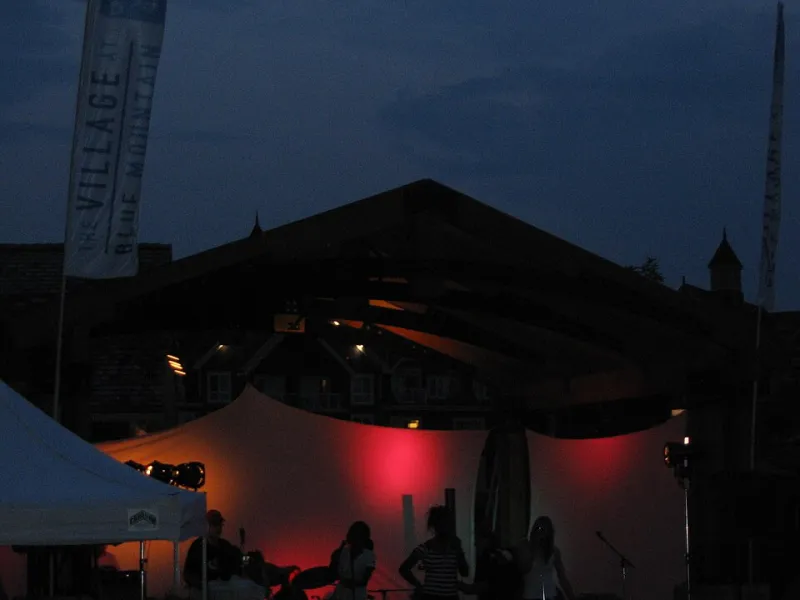
Photo: Share Bear, Public domain, via Wikimedia Commons
There's a moment that happens at almost every outdoor mountain concert. The last chord rings out, the crowd goes quiet for just a half-second longer than usual, and then the sound seems to fold itself into the surrounding peaks before dissolving into the open sky. It's the kind of thing you can't manufacture in an arena. You can't buy it with better speakers or a bigger production budget. It just happens — and once you've felt it, a standard stadium show starts to feel a little flat.
That feeling is exactly why mountain venues across the United States are having a serious cultural moment. Attendance figures are climbing, festival lineups are getting bolder, and artists who once reserved mountain gigs for quirky one-offs are now actively requesting them. So what's going on? Why are the hills suddenly so alive?
The Natural Amphitheater Effect
Let's start with the acoustics, because they really are something special. Mountain terrain — bowls, ridgelines, cliff faces — acts like a naturally sculpted concert hall. Sound waves bounce differently at altitude, and the absence of urban noise pollution means the baseline audio environment is dramatically cleaner than anything you'd find in a city park or a flat festival field.
Red Rocks Amphitheatre outside Denver is the gold standard here, and it's been proving the point for decades. Carved into a natural geological formation, the venue's two massive sandstone monoliths — Ship Rock and Creation Rock — function like enormous acoustic reflectors. Sound engineers who work there regularly describe it as one of the few outdoor venues where you don't have to fight the environment. The environment is doing half the job for you.
But Red Rocks is just the most famous example. Up in Vermont, venues tucked into the Green Mountains are drawing serious attention from touring acts who want that same sense of sonic intimacy at a smaller scale. The Trapp Family Lodge — yes, the one with the Sound of Music connection — has hosted performances where artists have described the surrounding hills as a natural reverb chamber. It's not just poetic language. There's real physics behind it.
Elevation Changes Everything
Beyond acoustics, altitude itself shifts the experience in ways that are hard to quantify but easy to feel. The air is thinner and cleaner. The light at sunset hits differently. Temperatures drop after dark in a way that makes the crowd pull together rather than spread apart. There's a shared physical reality to a mountain show that flat-ground festivals simply can't replicate.
Venue operators across Colorado, Montana, and the Pacific Northwest have started leaning into this intentionally. Rather than apologizing for logistical challenges — limited parking, winding access roads, unpredictable weather — they're reframing those friction points as part of the experience. Getting there is part of the journey. The effort creates investment. By the time you're standing in a mountain meadow watching a band set up against a backdrop of snow-capped peaks, you've already earned it.
"We stopped trying to compete with the big amphitheaters on production scale," one Colorado venue director told us. "We started competing on experience. And the mountains give us something no production budget can match."
Artists Are Seeking It Out
What's particularly interesting about the current wave is that it's not just fan demand pulling things uphill — artists are actively chasing these stages. Indie folk acts, bluegrass outfits, and even some electronic artists have been vocal about prioritizing mountain dates on their touring schedules.
The reasons vary. Some cite the creative energy of performing against dramatic natural scenery. Others talk about the audience quality — mountain show crowds tend to be deeply engaged, having made a deliberate choice to be there rather than just walking past a venue on their way somewhere else. A few artists have mentioned that the altitude itself changes their performance, forcing a kind of physical mindfulness that keeps them present in a way that air-conditioned arenas don't.
One folk artist who performs regularly in the Rockies put it simply: "When you can see three mountain ranges from the stage, you stop thinking about your setlist and start actually playing."
The Festival Ecosystem Is Growing
Beyond individual venue shows, the mountain festival circuit is expanding rapidly. Colorado alone now hosts dozens of multi-day events — from the long-established Telluride Bluegrass Festival to newer indie-focused gatherings in mountain towns that have leaned into their geography as a selling point. Vermont's festival scene has similarly grown, with events in the Mad River Valley and around Stowe drawing national acts and international visitors.
What's notable about these festivals is how they've started to resemble their European counterparts in philosophy, if not always in scale. There's an emphasis on community, on the full sensory experience of the place, on music as just one element of a larger cultural immersion. That's a significant shift from the traditional American festival model, which often treated the setting as incidental to the lineup.
What This Means for Live Music Culture
The mountain venue boom is part of a broader recalibration happening in American live music. Fans are increasingly willing to travel for experiences that feel genuinely different — not just a bigger screen or a louder PA, but a fundamentally different relationship between the performance and the place.
For the industry, that creates real opportunity. Mountain towns that once struggled to attract visitors outside ski season are finding that a well-curated concert series can fill hotels and restaurants in July just as effectively as powder snow does in January. Local economies are noticing. Infrastructure is improving. The feedback loop is getting stronger.
For fans, the message is simpler: if you haven't made it to a mountain show yet, you're missing something. The elevation is real. The acoustics are real. And that moment when the sound folds into the peaks and the crowd goes quiet? That's absolutely real too.
Some experiences are worth the altitude.